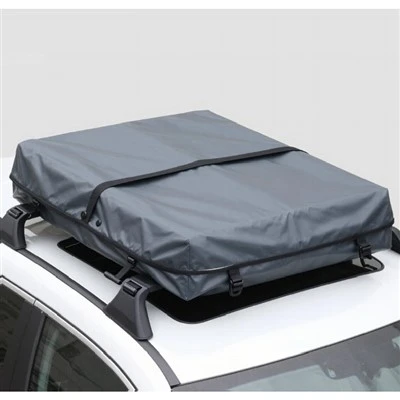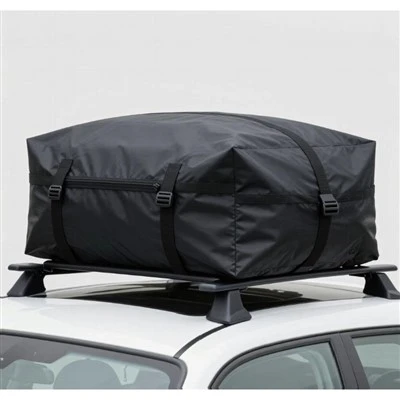
IPX6 means protection against powerful water jets under IEC 60529 test conditions; it does not automatically mean a soft roof bag is waterproof in every real-world condition. For a Waterproof roof bag OEM project, IPX6 performance depends on the fabric coating, welded seams, zipper construction, buckle penetrations and final-product water testing.
The production target should therefore be defined at finished-product level, with the waterproof specification written into the BOM and inspection plan.
IPX6 Industrial Definition Under IEC 60529
IEC 60529 IPX6 Uses 12.5 mm Nozzle and 100 L Min Water Flow
Under IEC 60529, the IPX6 water-jet test uses a 12.5 mm nozzle, approximately 100 L/min water flow, with the test conducted from multiple directions. The exposure time and distance are defined by the applicable test setup.
For a soft roof bag, the test should cover the complete assembled product rather than testing fabric samples only.
| Parameter | IPX6 Reference |
|---|---|
| Standard | IEC 60529 |
| Water protection | Powerful water jets |
| Nozzle diameter | 12.5 mm |
| Water flow | Approximately 100 L/min |
| Test direction | Multiple angles |
| Test object | Finished assembled product |
| Acceptance | No harmful water ingress |
IPX6 should not be confused with temporary immersion protection. IPX7 and IPX8 address immersion under different conditions.
100 Percent Seam Coverage for High Frequency Welded Construction
For PVC-coated fabrics, high-frequency welding creates a continuous bonded seam without relying solely on needle stitching. This removes stitch holes from the primary water barrier.
A production drawing should identify:
| Welding Parameter | Typical Development Range |
|---|---|
| Weld overlap | 15–25 mm |
| Welding frequency | Equipment dependent |
| Welding pressure | Material dependent |
| Welding time | Material dependent |
| Cooling time | Material dependent |
| Peel strength | Project-specific test value |
| Seam width | 10–20 mm |
There is no universal welding temperature or pressure suitable for every fabric. PVC, TPU and different coating weights require separate process validation.
840D TPU Coated Fabric and PVC Seam Performance
840D TPU and 1000D PVC Require Different Welding Windows
Material selection affects both waterproof performance and production yield. TPU-coated nylon can provide good flexibility and low-temperature folding performance, while PVC-coated polyester is widely used for RF welding and heavy-duty applications.
| Material | Typical Construction | Welding Compatibility | Flexibility | Common Roof Bag Use |
|---|---|---|---|---|
| 600D Oxford | PU/PVC coated polyester | Limited to material system | High | Standard bags |
| 840D Oxford | PU/TPU coated polyester | Project dependent | High | Premium OEM |
| 840D TPU Nylon | TPU-coated nylon | TPU welding system | High | Lightweight designs |
| 1000D PVC | PVC-coated polyester | RF welding | Medium | Heavy-duty bags |
Fabric GSM, coating thickness, hydrostatic resistance and seam peel strength should be recorded in the BOM Bill of Materials rather than specifying only fabric denier.


Waterproof Zipper Structure for 20 to 30 mm Seam Zones
PU Coated Zippers Need 100 Percent Closure Contact
A waterproof zipper is a secondary water barrier. Its performance depends on the zipper tape, coating, teeth structure, slider pressure and connection between zipper tape and shell fabric.
A roof cargo bag specification can include:
- PU-coated zipper tape with 20–30 mm protected end zones
- Welded or sealed zipper-to-fabric connection
- Reinforced zipper corners with 2–3 fabric layers
- Closed-end construction at high-risk water entry points
- Controlled slider compression
- Water testing after repeated opening and closing cycles
The zipper should be tested after assembly. A zipper that passes as a component may still leak through its sewn or welded connection to the bag body.
For buyers comparing configurations, review the Waterproof SUV Roof Bag range for different waterproof roof bag structures and mounting designs.
10 to 30 kPa Hydrostatic Testing for Coated Fabric
ISO 811 Pressure Testing Measures Fabric Water Resistance
Hydrostatic testing can be used to evaluate coated fabric resistance to water penetration. ISO 811 is commonly used for determining hydrostatic pressure resistance of textile materials.
However, fabric hydrostatic testing and finished-bag IPX6 testing measure different failure mechanisms.
| Test | Primary Purpose | Sample |
|---|---|---|
| Hydrostatic pressure test | Fabric water resistance | Coated fabric |
| Seam leakage test | Weld or stitch integrity | Finished seam |
| Zipper water test | Closure resistance | Installed zipper |
| IPX6 test | Finished-product water ingress | Complete roof bag |
| Peel test | Weld bonding strength | Welded seam sample |
| Cycle test | Durability after use | Finished assembly |
The final acceptance criteria should be agreed with the buyer before mass production.
100 Percent Finished Product Water Inspection
30 Minute Dry Inspection and Controlled Water Exposure
A practical QC workflow should separate incoming-material inspection, welding-process inspection and finished-product testing.
| QC Stage | Inspection Point | Recommended Control |
|---|---|---|
| Incoming fabric | GSM and coating | Batch inspection |
| Welding setup | Weld width and bonding | First-piece approval |
| Seam inspection | Pinholes and incomplete welds | 100% visual inspection |
| Zipper assembly | Alignment and sealing | First-piece plus sampling |
| Load test | Strap and anchor points | Batch sampling |
| Water test | Leakage points | Defined sampling plan |
| Final packing | Dry interior and closure | 100% visual check |
Critical leakage areas include corners, zipper ends, welded intersections, strap anchors and drainage-prone bottom sections.
A finished roof bag should also be tested after representative folding and loading because deformation can change seam geometry.
±5 mm Assembly Control for OEM Waterproof Roof Bags
15 to 25 mm Weld Overlap Requires Pattern Accuracy
OEM waterproof performance is strongly affected by dimensional control. Excessive pattern deviation can reduce weld overlap or place zippers and mounting straps outside their intended positions.
Typical production drawings may specify:
| Feature | Example Tolerance |
|---|---|
| Overall length | ±10 mm |
| Overall width | ±8 mm |
| Weld overlap | ±2 mm |
| Zipper position | ±5 mm |
| Strap position | ±5–10 mm |
| Reinforcement position | ±5 mm |
These values should be confirmed during prototype approval rather than treated as universal standards.
3 Week OEM Prototype Cycle for IPX6 Validation
7 to 10 Day Prototype Build With Final Water Testing
A normal OEM development sequence can be structured as follows:
- Days 1–3: BOM and material confirmation
- Days 4–7: Pattern and welding parameter development
- Days 8–14: Prototype production
- Days 15–18: Water, seam and mounting tests
- Days 19–21: Corrections and final sample approval
Complex zipper systems, custom buckles or new TPU structures may require additional development time.
For brands and distributors sourcing a Waterproof roof bag OEM from a China manufacturer, the RFQ should specify fabric construction, target IP rating, zipper type, usable capacity, mounting system, annual quantity and required test reports.
FAQ
FAQ
Q: What does IPX6 mean for a waterproof roof bag?
A: IPX6 indicates resistance to powerful water jets under IEC 60529 test conditions. It does not mean immersion protection. Finished-product testing is required because seams, zippers and mounting points can leak even when the fabric itself is waterproof.
Q: Can TPU coated fabric achieve IPX6 waterproof performance?
A: Yes. TPU-coated fabric can be used for waterproof roof bags when the coating, welding process, zipper interface and finished assembly are properly validated. The final IPX6 claim should be supported by finished-product testing.
Q: How should an OEM buyer verify roof bag waterproof performance?
A: Request the material specification, welding process parameters, seam strength data and finished-product water-test report. The inspection plan should include zipper areas, welded seams, corners and strap attachment points before mass production approval.